Neither Here Nor There Is Exactly Where You Want to Be: Rethinking the Reshoring Debate
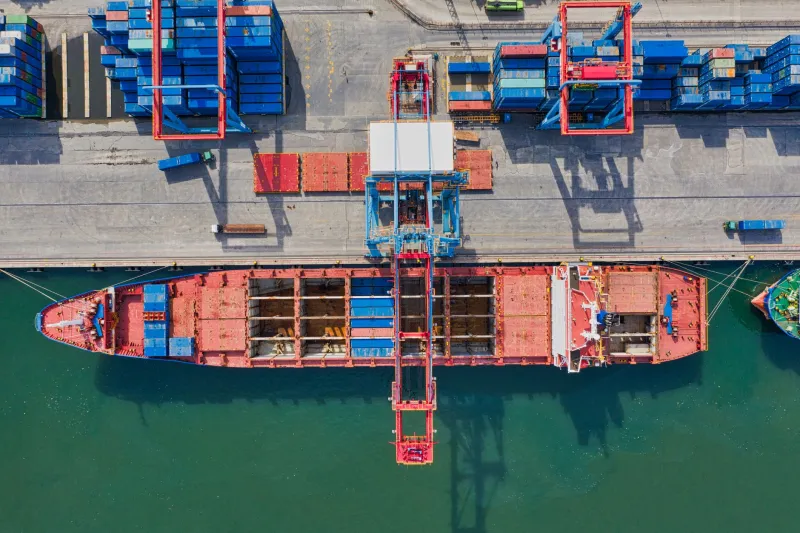
Walk any trade show floor from Columbus to Anaheim and you'll hear the same argument playing out. One booth insists reshoring is a patriotic and economic imperative. The next explains, with equal conviction, that American manufacturing costs make the whole conversation academic. Both sides are right. Both sides are also asking the wrong question.
The assumption buried in the reshoring debate is that a supply chain is a single, indivisible thing — you either move it home or you don't. In practice, supply chains are assemblies of distinct functions: component fabrication, sub-assembly, final assembly, quality control, packaging, and inventory positioning. Treating them as one monolithic decision means leaving serious margin on the table. The companies we work with that have navigated the last five years of tariffs, port congestion, and demand whiplash most successfully are almost never fully domestic or fully offshore. They are deliberately, unglamorously hybrid.
The False Binary, and What It Costs You
Consider a mid-sized consumer goods brand selling into big-box retailers. Going fully domestic might mean paying two to three times more for components that only exist at scale in Asian manufacturing clusters. Going fully offshore means long lead times, exposure to ocean freight volatility, and a six-week wait every time a buyer requests a restock. Either extreme creates a vulnerability the other one solves.
The hybrid answer looks different depending on the product, but the shape is consistent: source components where they're made best and cheapest, then perform final assembly, inspection, and stocking where your customers are. A product can be genuinely "sourced globally" in its bill of materials while being "made in USA" in the sense that matters most to a retail buyer — final assembly, quality assurance, and inventory sitting in a stateside warehouse, ready to ship in days rather than months.
This isn't a loophole mentality. It's an honest acknowledgment that modern products have no single country of origin anyway. A circuit board from Shenzhen, fasteners from Taiwan, packaging from Ohio, and assembly in Georgia is not a compromise. It is what a resilient supply chain actually looks like in 2025.
A Four-Question Framework for Splitting Your Chain
Buyers who ask us where their supply chain should live get the same answer: it depends, but not evasively so. The dependency resolves quickly if you interrogate four things.
1. Where does the specialized capability exist? Some processes — precision tooling, certain coatings, high-volume electronics — simply aren't available at competitive quality or cost in the US. Don't fight geography out of sentiment. Identify which steps in your production genuinely require offshore expertise and leave those offshore.
2. What does freight actually cost you per unit of risk? A container of bulky, low-value goods may cost more to ship than the domestic premium on those same goods. Run the math on a landed-cost basis, including duties, drayage, and the carrying cost of pipeline inventory. For dense, high-value items, global sourcing usually wins. For the opposite profile, domestic may surprise you.
3. How fast does your demand curve move? If your sales patterns are predictable and your replenishment cycles are long, distance matters less. If you face seasonal spikes, retailer chargebacks for late deliveries, or volatile consumer demand, stateside final assembly and stocking act as a buffer that pure imports can't replicate.
4. What does your customer actually pay for? Retail buyers increasingly ask about supply chain provenance, and "assembled in USA" carries real merchandising weight. If your channel rewards it, final-stage domestic production isn't a cost — it's a feature you can price.
The Middle of the Chain Is Where the Value Hides
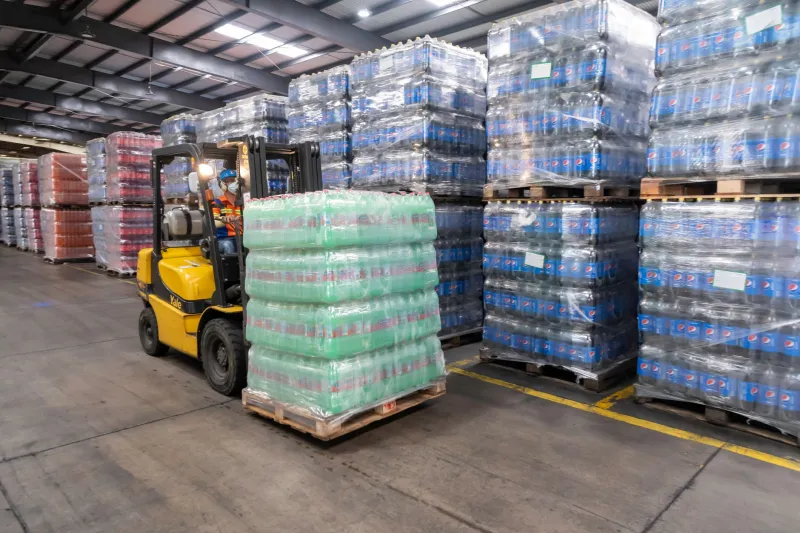
The most underappreciated part of the hybrid model is what happens after goods land. Quality control performed stateside — before product reaches your customers rather than after — catches defects at a fraction of the cost of returns and chargebacks. Bonded warehousing and strategic stocking convert a two-month import pipeline into a two-day fulfillment promise. Duty engineering at the point of final assembly can materially change your effective tariff rate.
None of this requires abandoning global suppliers. It requires treating them as component partners rather than as the whole operation. A trading partner who can coordinate overseas fabrication with domestic consolidation, inspection, and distribution gives you something neither a pure importer nor a pure domestic manufacturer can offer: optionality.
Choose Functions, Not Flags
The reshoring conversation will keep producing slogans, and slogans make poor procurement strategy. Our advice to American buyers is blunt: stop asking whether your supply chain should be here or there. Inventory every function in your chain, score each one against cost, capability, speed, and customer expectation, and place it accordingly. Some functions will land in Guangdong. Some will land in Georgia. The companies that make peace with that split — rather than performing purity for either camp — are the ones still shipping on time when the next disruption arrives.
Global supply and domestic presence aren't enemies. Handled well, they're the same strategy viewed from two ports.