Why the Middleman Still Matters: A Candid Case From Inside the Trading Business
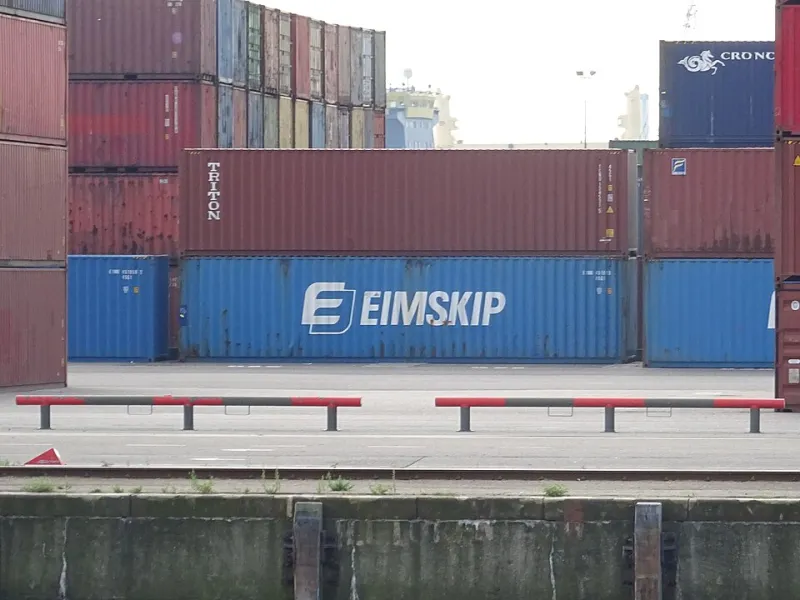
Photo: AgainErick, CC BY-SA 4.0, via Wikimedia Commons
Let's be upfront about the obvious: nobody wakes up excited to pay a trading company. If you're a buyer in Dallas or Detroit running a product line, every dollar of margin we take is a dollar that didn't go to your bottom line. The pitch from the platforms is seductive — search a catalog, message a factory, wire a deposit, done. So why do trading companies like ours still exist, and more importantly, why do we think we still deserve to?
We'd rather answer that question honestly than dodge it. Here is what a good trading partner actually does, and — just as important — what we don't do.
What You're Really Buying
The core service isn't introductions. Anyone can find a factory listing online. What you're buying is accountability with teeth.
When a factory ships you 10,000 units with the wrong gauge of stitching, you have exactly one lever to pull: withhold future orders. That's a slow, weak lever, especially if you're a mid-sized buyer placing a fraction of that factory's monthly volume. When a trading company is in the middle, the factory answers to a party that controls many orders across many clients — and that answers in your language, your time zone, and your legal framework.
There are three things we do that a platform listing simply cannot:
- Quality control on the ground. Pre-shipment inspections aren't a checkbox; they're someone physically opening cartons, measuring against the golden sample, and catching the defect before it boards a vessel. A rejected shipment caught in Shenzhen costs a rework run. The same defect caught in Ohio costs a returns program.
- Consolidated logistics. If you're sourcing components from three factories, we consolidate them into one container, one bill of lading, one customs entry. For a US small business without an in-house import desk, that consolidation is often the difference between importing and not importing at all.
- Dispute leverage. When something goes wrong — and at volume, something eventually does — the conversation happens between two businesses with ongoing relationships, not between a lone buyer and a sales rep who has already moved on to the next inquiry.
Where the Model Genuinely Fails
Now the part most trading companies won't say out loud.
We are not the right choice for high-volume, single-product buyers. If you're ordering 50,000 units a month of one SKU, you should be dealing with the factory directly — or better yet, with your own QC staff on site. Our margin buys you nothing at that scale.
We add cost to every order, full stop. There's no version of this where our fee is free. The honest framing is whether the fee costs less than the mistakes it prevents. For a first-time importer ordering mixed SKUs at moderate volume, it usually does. For a seasoned buyer with established factory relationships, it often doesn't. We'd rather tell you that than bill you for a service you don't need.
A bad trading company is worse than no trading company. Some firms are pass-throughs — they forward your inquiry, mark up the quote, and disappear when problems surface. The margin is identical whether or not anyone did the work. That's why the real question isn't "middleman or no middleman?" It's "does this particular middleman earn it?"
The Test We Hold Ourselves To
If you're evaluating any trading partner — including us — here's the standard we'd suggest:
- Will they disclose the factory? Some secrecy is legitimate (proprietary products, exclusive arrangements), but a partner who refuses to ever name a supplier is hiding something, usually the markup.
- Do they push back on bad ideas? A real partner tells you when your spec is unmanufacturable at your price point. A pass-through says yes to everything.
- What happens after the deposit clears? Ask to speak with a current client. Any firm confident in its service will make that easy.
The Bottom Line
The platforms didn't kill the trading company; they killed the trading company's excuse for existing without doing real work. The middlemen who survived are the ones who inspect, consolidate, negotiate, and answer the phone when a shipment goes sideways at 3 a.m. Pacific time.
We think that work is worth paying for. We also think you should demand proof before you pay anyone — ourselves included — a single dollar of margin. That's not the most comfortable sales pitch in the world. It's just the honest one.