Reading the Fine Print: The Real Cost of That 'Cheap' Quote From China
The Quote That Looked Too Good
Every US buyer has seen one: a supplier quotation that undercuts the competition by 15 or 20 percent, delivered in a clean spreadsheet with a unit price highlighted in bold. It's tempting to sign on the spot. But after two decades of moving goods across the Pacific, we can tell you that the unit price is roughly half the story. The other half shows up later — in port fees, bond premiums, and exchange rate margins that never appeared on that spreadsheet.
Consider a real-world scenario. A midwest retailer orders 2,000 units at $4.50 each, a $9,000 order that seems straightforward. By the time the container clears and the goods reach the warehouse, the true cost per unit is closer to $6.10. Nothing was hidden, exactly. It simply was never mentioned.
Where the Money Leaks: Four Charges That Surprise First-Time Importers
1. Demurrage and Detention
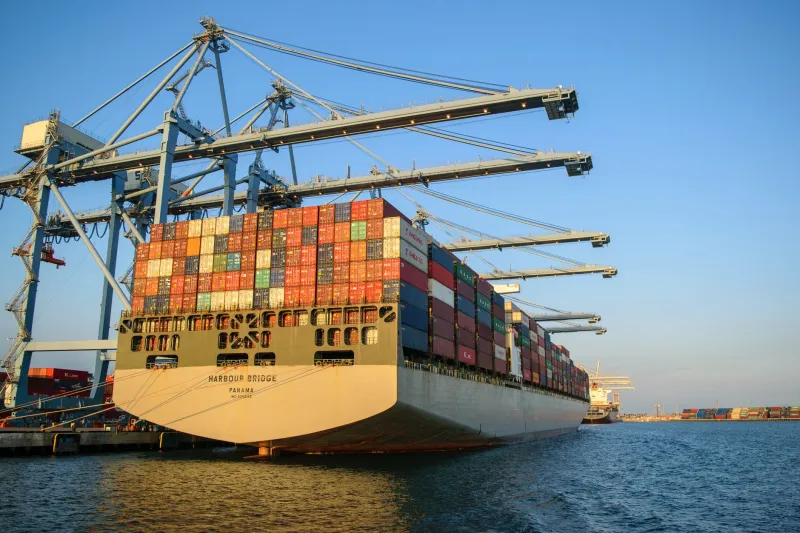
When a container arrives at a US port, the clock starts. Typically, you get three to five "free days" to pick up the container before demurrage kicks in — a daily penalty for leaving it at the terminal. Miss the window and rates escalate quickly: $150 to $300 per day at major ports like Los Angeles/Long Beach, and during congestion events, far worse.
Detention is the twin charge: fees for keeping the shipping line's container beyond the allowed period after pickup. A single delayed pickup during peak season can add $1,000–$2,500 to a shipment that was budgeted to the penny.
2. Customs Bonds and Entry Fees
Formal entries into the United States require a customs bond. Continuous bonds (covering a year of imports) run roughly $300–$500 annually plus brokerage fees; single-entry bonds are cheaper per shipment but add up fast. Add the Customs and Border Protection entry processing fees and the Merchandise Processing Fee (0.3464% of value, with minimums and caps), and a small importer can easily spend $600–$900 a year before a single cent of duty.
3. Congestion and Bunker Surcharges
Ocean freight quotes are rarely final. Carriers add bunker adjustment factors, peak-season surcharges, and congestion fees — particularly when West Coast ports back up, as they have repeatedly in recent years. A $3,500 ocean quote can become $5,200 by sailing day. Contracts that don't cap these surcharges are invitations to surprise.
4. Currency Conversion Spreads
If you pay your supplier in RMB rather than USD, your bank or payment platform takes a spread — often 1% to 3% off the mid-market rate. On a $50,000 annual order volume, that's $500 to $1,500 that never buys a single additional unit. It's invisible on any single invoice, which is precisely why it compounds quietly.
From Unit Price to Landed Cost
The discipline that separates professional buyers from frustrated ones is a simple calculation: landed cost per unit, which includes product cost, freight, insurance, duties and tariffs, port and terminal fees, brokerage, bond amortization, inland trucking, and the currency spread. Until every quote is converted to this figure, you are not comparing suppliers — you are comparing headlines.
The YYG Quote Audit Checklist
Before accepting any supplier quotation, run it through these questions:
- Incoterms: Is this quote FOB, EXW, or CIF? An EXW price excludes nearly everything; an FOB price at least gets goods onto the vessel. Compare like with like.
- Freight basis: Is the ocean rate quoted per container or per CBM? Are surcharges itemized and capped?
- Duty assumptions: Has the supplier stated an HS code and duty rate? Verify it independently — see our companion piece on classification.
- Free time at destination: How many demurrage-free days does the carrier allow at your arrival port?
- Bond and brokerage: Who pays for the customs bond, ISF filing, and entry fees? Get dollar figures, not "standard rates."
- Inland delivery: Is trucking to your warehouse included, quoted separately, or your problem?
- Payment currency: What rate will actually apply, and what spread does the bank take?
- Validity period: How long is the quote honored? Peak-season rates expire quickly.
A Closing Word
None of this means Chinese sourcing is a bad deal — for most US product categories, it remains the most cost-effective option available. It means the deal is only as good as your visibility into it. At YYG Trading Co., we tell every client the same thing: the cheapest quote on your desk is rarely the cheapest shipment on your dock. Ask the eight questions above, and the numbers will tell you the truth.