The Second Sample Is the Real One: Why Approval Binds Only You
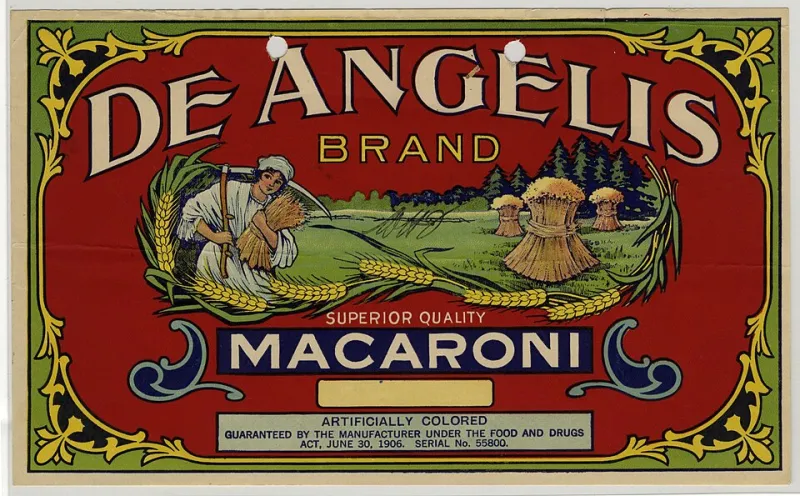
Photo: Unknown authorUnknown author or not provided, Public domain, via Wikimedia Commons
Ask any veteran importer about their first real quality dispute, and the story follows a familiar arc. The pre-production sample arrived beautiful. The purchase order was signed. Eight weeks later, a container landed in Long Beach carrying goods that looked close enough at a glance — but the zipper pull was lighter, the stitching count was lower, and the plastic had that faintly hollow feel of a resin blend nobody mentioned.
The factory's defense is always the same, and it is technically airtight: you approved it. Not the material spec. Not the tolerance sheet. The sample. And in the factory's accounting, the sample was a courtesy; the approval was the contract.
The Sample Is a Proposal, Not a Promise
There's a mental model worth adopting early in any sourcing relationship: the first sample is a sales document, and the second sample — the one pulled from the pilot run, on the production line, with the actual tooling and the actual workforce — is the first honest picture of what you're buying.
Between those two samples sits everything that makes mass production mass production. The hand-finished prototype may have used premium components sourced in quantities of fifty. The production run will use whatever the purchasing manager can lock in at the quoted price, on a line running hundreds of units an hour, under a deadline that was negotiable and a material cost that was not.
None of this is necessarily bad faith. It's compression. A factory quoting you $4.80 a unit made an assumption about material costs at the time of the quote. When resin prices move, or a component supplier changes an internal part, the factory adapts — quietly, without a change order, because nobody told them they couldn't.
What Your Signature Actually Freezes
Here is the asymmetry that surprises newer importers: when you sign off on a sample, you create a binding reference — for yourself. The factory can point to that signed approval and say the delivered goods conform to it. But the approval only binds you if it's specific enough to be enforceable. "Approved as shown" is a phrase that will be interpreted in the cheapest possible way by whoever needs it interpreted.
A signed approval that says nothing about material grades, weight tolerances, colorfastness standards, or packaging specifications is an invitation to drift. The factory hasn't done anything wrong in their framing; they've simply optimized within the space your document left open.
Writing an Approval That Holds
A protective approval document doesn't need to be a legal treatise. It needs to close the doors that would otherwise be walked through. In practice, that means:
- Named materials, not descriptions. "ABS housing, virgin resin, RoHS-compliant" beats "durable plastic housing" in every dispute scenario. Where possible, reference a specific grade or a retained physical standard.
- A sealed reference sample held by both parties. The golden sample should exist in duplicate — one in your office, one in the factory's QC room, both signed and dated across the seal. Photographs are convenient; physical seals are persuasive.
- An explicit no-substitution clause. State plainly that no material, component, or packaging change may be made after approval without written consent and, where relevant, a revised unit price. Factories respect clauses they've seen enforced; they ignore silence they've never seen tested.
- A pilot-run verification step. Require that units from the first production hours — not hand-prepared samples — be photographed or shipped for sign-off before the balance of the order proceeds. This is the single highest-leverage clause in the entire document.
- **Consequences, stated calmly." Goods that deviate from the approved specification are subject to rejection at destination, with return freight at the supplier's discretion. You may never invoke it. Its existence changes behavior.
The Second Sample, Revisited
Buyers who request production-line samples — not pre-production prototypes — report a consistent pattern: the second sample is always slightly worse than the first. That's not a red flag. That's reality arriving on schedule. The question is whether the gap falls within tolerances you defined, or tolerances the factory improvised.
At YYG Trading Co., we've sat on both sides of this table, and the pattern holds across industries and continents: the buyer's approval is the only fixed point in the entire production timeline. Everything else — material costs, component availability, line scheduling — moves. If your approval document doesn't freeze the things that matter, the production process will decide them for you, one quiet substitution at a time.
The second sample is the real one. Make sure your paperwork knows it.